
Pruning plants can be very worrying.
When I was apprentice-to-my-mother I’d do tentative pruning, cut a branch or two and call it a day pruning, cut four or five branches while I winced pruning. I didn’t have the confidence to do the serious winter pruning. I’d do light summer pruning, a little shaping, a little snipping.
Once I began to manage my own gardens and allotments I could see the effects of my not-quite-enough-pruning style. The roses grew so leggy that I’d have to stand on a ladder to smell the blooms, the apple began to bend and split and the hazel, well the hazel just got plain outta hand.
And so I began to prune with purpose.
At times I have felt bad about uprooting plants, about interfering with their lives, about bending them to MY will. But I have come to understand these plants are not in the wild, they are in my garden and I am growing them for a purpose. I sow and grow them for medicine, for food, for beauty, for structural support, for materials. I need them to fit together within the tapestry I have designed. I am not tentative when I harvest them, I need not be shy about shaping them.
And so I did. This isn’t a guide to pruning, there are already plenty of good guides out there, in books or the interweb (here is an extensive guide).
After years many my pruning may have become almost a bit too gung-ho. I found myself chopping bits off a friends tree during Hurricane Doris before it collapsed her neighbours fence (hard to do when the wind is blowing not only the branches but also the sawdust into your eyes, “I’m blind I tell you, bliiind”). Standing in a tree that’s swaying violently with a saw is definitely extreme pruning and probably a little foolish. Not ideal for attaining the perfect clean cut. And maybe a bit macho. But also incredibly invigorating. Anyway –
In the Autumn of 2016 I needed to coppice my guelder rose aka viburnum opulus for two excellent reasons: it was getting too big and I needed to make tincture from the bark.
Coppicing is a little different from pruning in that you aim to reduce the tree/bush almost completely to the ground to encourage new, young, straight growth. This is properly worrying the first time you do it. But to get the growth you need, you must cut.
One time when I was coppicing a hazel on an allotment plot I had taken over, I was watched by a friend’s dad (who’d worked doing, well, loads of things and apparently one of them was coppicing) who thought I was being a right wuss as I was leaving about a third of it untouched. I’m trying not to shock the tree after such a long time un-pruned, I protested. He was not impressed, “It’ll be fine, just chop it all back”. Friends, I couldn’t quite bear to, but I did cut about 7/8ths. And then cut the other 1/8th the following spring (once I was reassured I hadn’t killed it). It was fine.
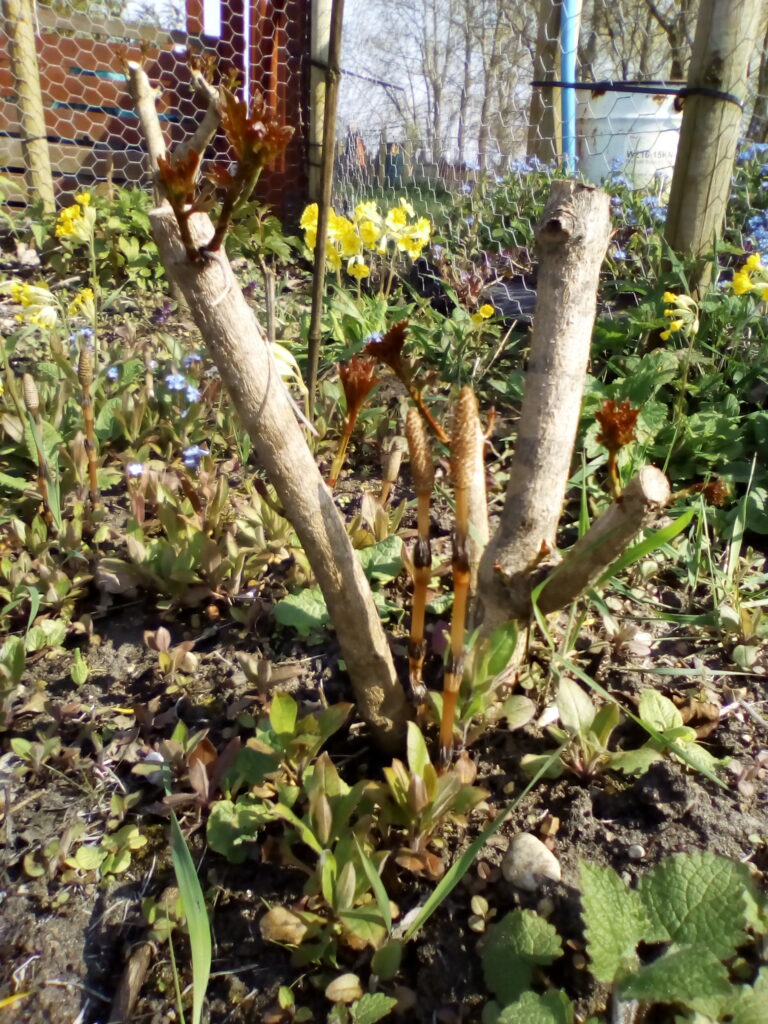
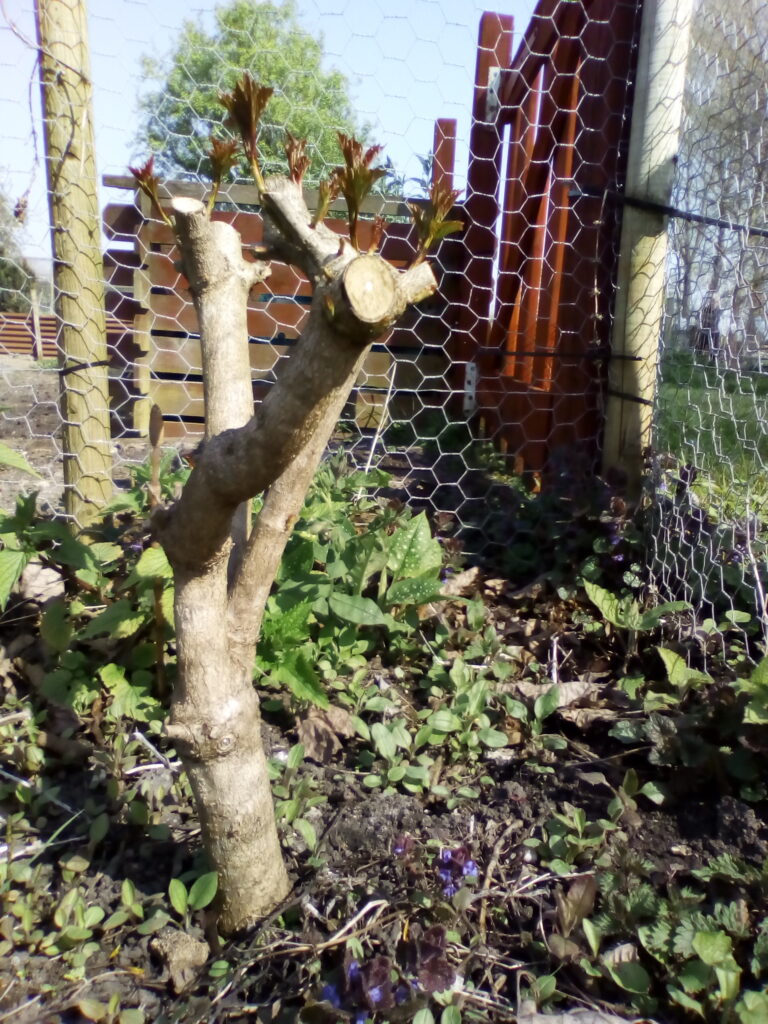
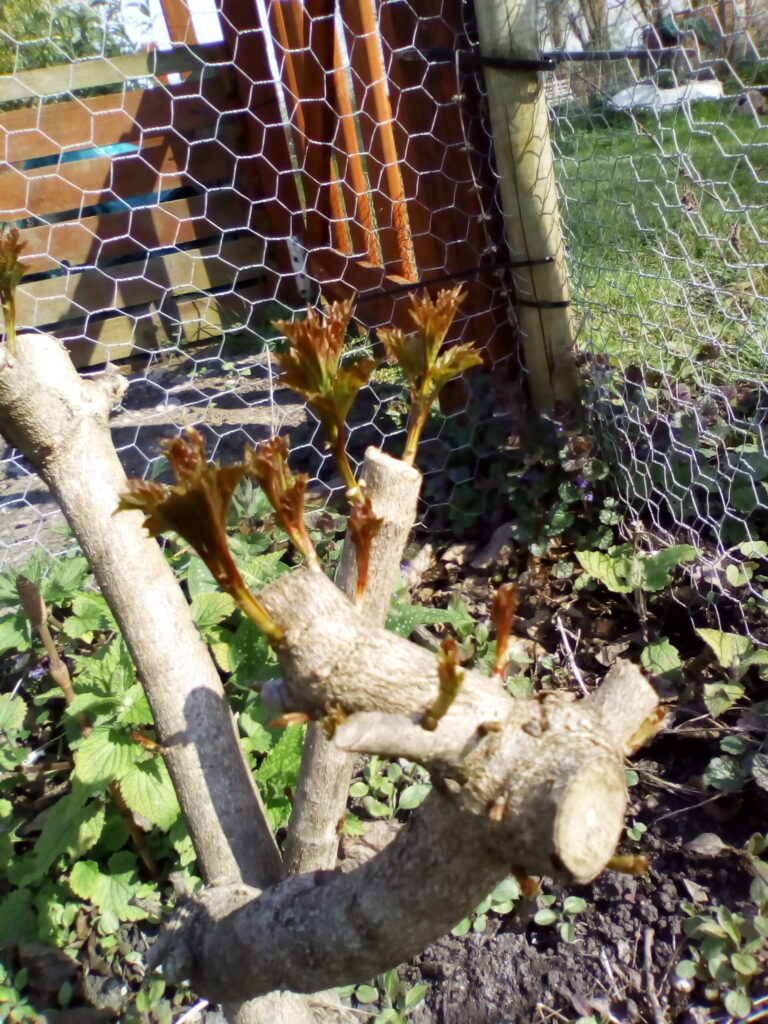
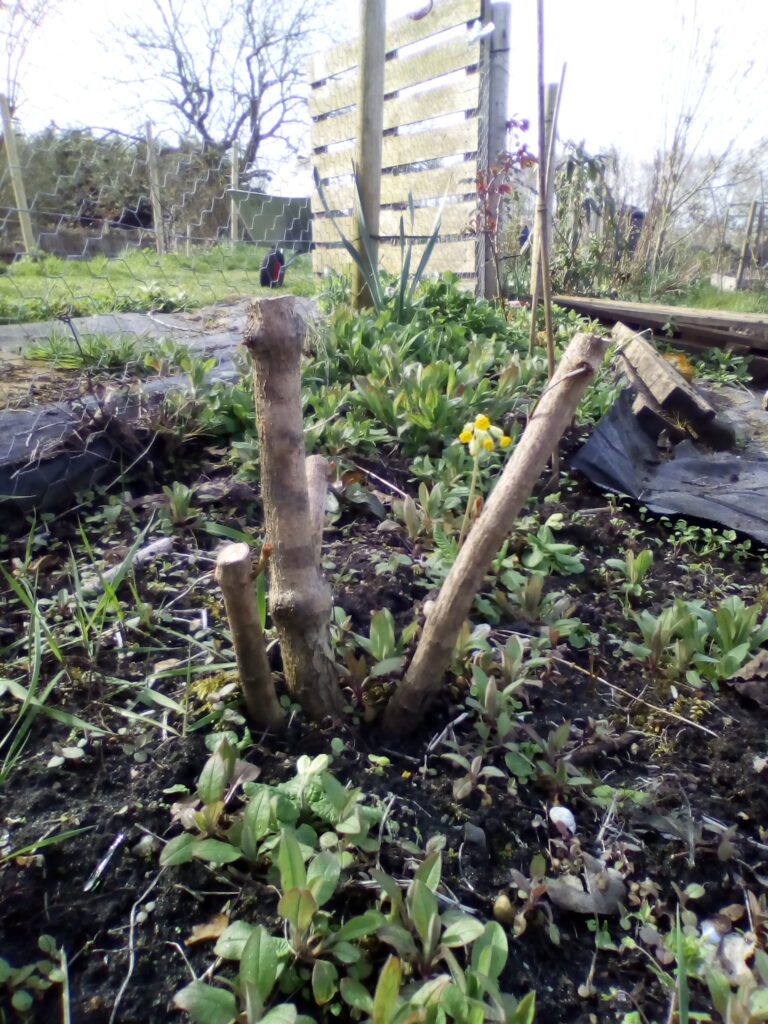
This autumn I really reduced the guelder rose to stumps.
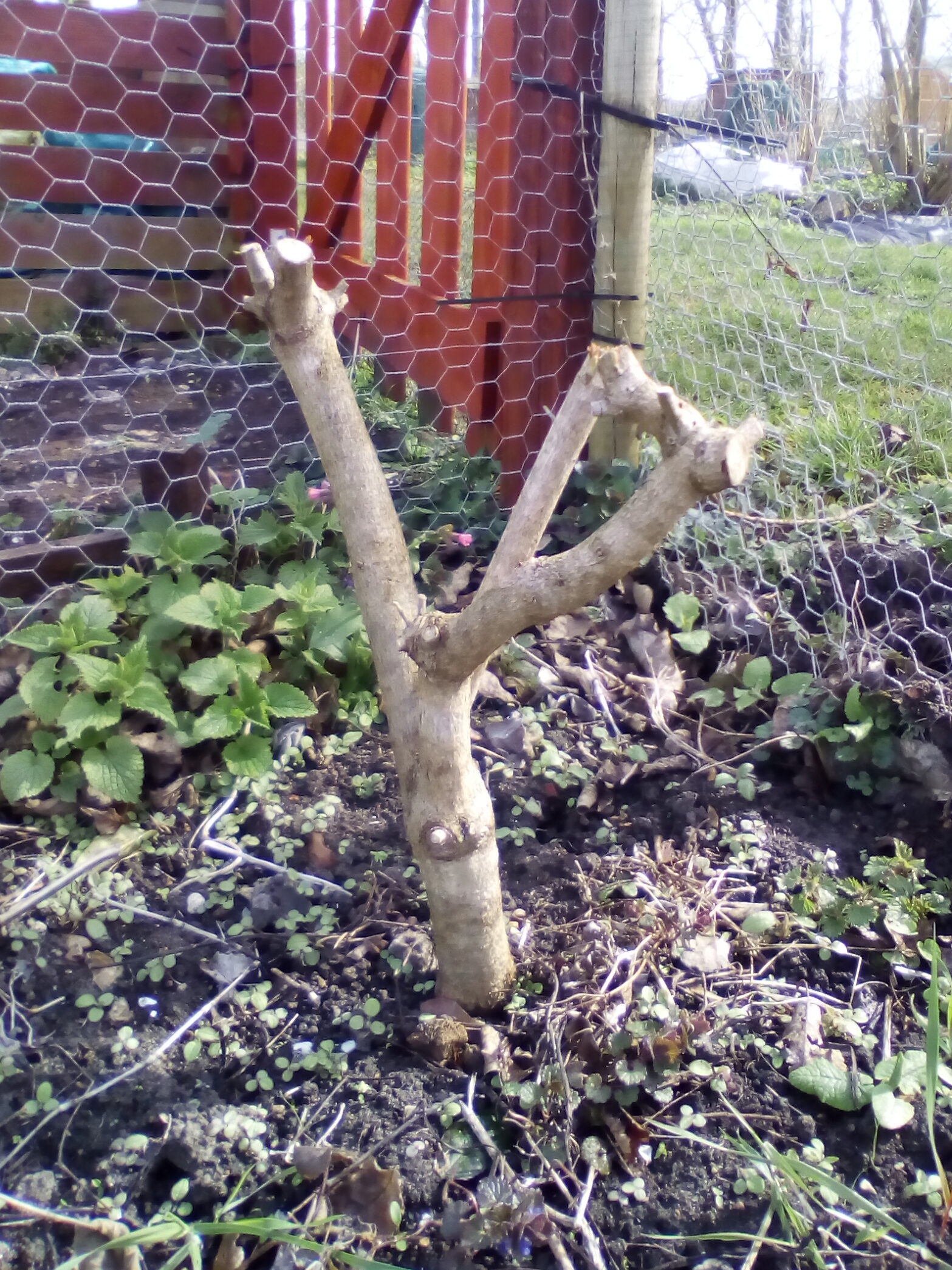
The bark from the branches that were cut was peeled off to make the deep red tincture that is so very useful for relaxing all kinds of muscle (smooth and skeletal, if you like that sort of detail), and the peeled branches stacked to dry for kindling, so nothing was wasted. It was all purposeful.
But, I hear you cry, will it grow back? Well, let’s see, these pictures were taken this week, what do you think?